Knee · Treatment
Knee Replacement
Resurfacing the worn ends of the joint with metal and plastic, for a knee where arthritis has taken away your walking and your sleep.
At a glance
- Anaesthesia
- Spinal, usually with a nerve block
- Time in theatre
- 60–90 minutes
- Hospital stay
- Two to three nights
- Walking
- Same day, with a frame
- Walking stick
- Discarded at around 2–4 weeks
- Driving
- 4–6 weeks
- Comfortable daily life
- 3 months
- Implant lifespan
- Around 90% still working at 15–20 years
This is usually the right operation if…
- Pain that wakes you at night or stops you sleeping on that side.
- Walking distance shrinking to the point that it limits your life — shopping, worship, work, visiting family.
- X-rays showing established arthritis, matched to where your pain actually is.
- Painkillers, physiotherapy, weight management and injections have been tried and are no longer enough.
- Stiffness or deformity that has begun to change how you walk.
It is probably not right if…
- Your X-rays show mild wear and your pain is manageable. Replacement is a good operation done at the right time, and too early is a real mistake.
- You are young with arthritis in only one compartment — an osteotomy may let you keep your own knee for a decade or more.
- There is an active infection anywhere in your body, which must be cleared first.
- You are not able to engage with rehabilitation. This operation demands work afterwards.
What is actually replaced
The name is misleading. Nothing is removed and swapped wholesale. What happens is closer to resurfacing: a few millimetres of worn bone and the destroyed cartilage are taken from the end of the thigh bone and the top of the shin, and each is capped — metal on the thigh, metal on the shin, with a smooth, tough plastic bearing between them. Your ligaments, your muscles and the great majority of your bone stay exactly where they are.
What you feel afterwards is the absence of bone rubbing on bone. That is where the pain relief comes from.
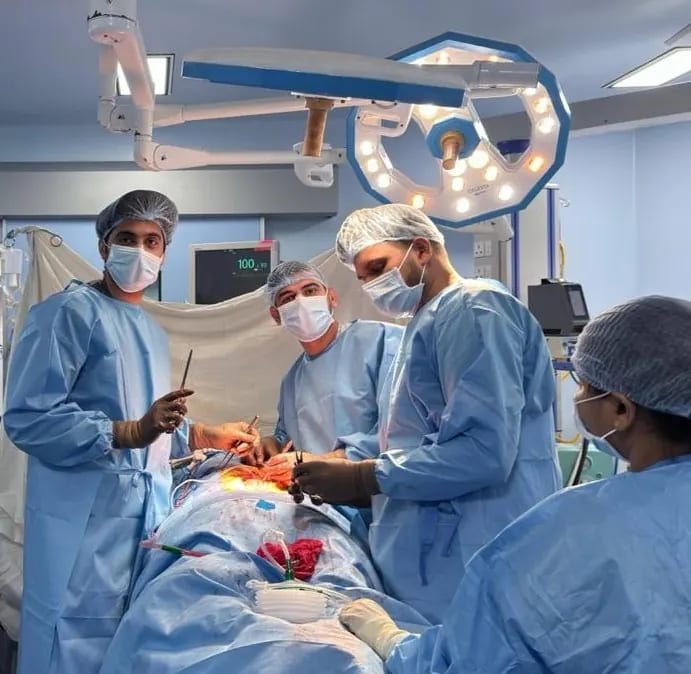
Partial or total?
If wear is confined to one half of the knee and the ligaments are sound, only that half needs resurfacing. A partial replacement removes less bone, keeps both cruciate ligaments and generally feels more like a natural knee — but it is only right for a well-selected minority, and it is more likely to need revising later.
| Aspect | Partial (unicompartmental) | Total |
|---|---|---|
| Suits | Wear in one compartment, good ligaments | Wear in two or three compartments |
| Bone removed | Less | More |
| Incision | Smaller | Larger |
| Hospital stay | One to two nights | Two to three nights |
| Recovery | Faster — often noticeably | Steady over three months |
| Feel | Closer to a natural knee | Excellent, but you know it is there |
| Revision rate | Higher | Lower |
What a replaced knee will and will not do
Setting expectations honestly is part of the operation. This is what the evidence and experience actually support.
| What you can expect | What to be realistic about |
|---|---|
| Pain relief — the main reason to do it, and the thing it does best | It will not feel identical to a young natural knee |
| Walking distance restored, and sleeping through the night | Kneeling is often uncomfortable and sometimes stays that way |
| Stairs, slopes, cycling, swimming, long walks | Running and jumping are discouraged — they wear the bearing |
| Bending to around 120 degrees for most people | Full deep squatting or sitting cross-legged may not come back |
| A straighter leg if it had become bowed | Some patients notice clicking, or awareness of the implant |
| Return to work, worship, travel and family life | Full recovery is three months, and up to a year to feel settled |
Risks
Knee replacement is one of the most successful operations in modern medicine, and most patients say they would have it again. The risks are real but uncommon, and you should hear them before you decide.
- Infection, in roughly 1 in 100 to 1 in 200 cases. This is the complication we work hardest to prevent, and treating it can mean further surgery.
- A blood clot in the leg or lung. Reduced by walking on the day of surgery and by blood-thinning medication.
- Stiffness, if movement is not worked on in the first six weeks.
- Persistent pain in around 1 in 10 patients, sometimes without a clear cause. This is the honest figure and it is worth knowing.
- Loosening or wear of the implant over many years, which may eventually need a revision.
- Numbness along the outer side of the scar, which is common and usually of no consequence.
- Rarely, injury to nerves or blood vessels around the knee.
The best time to do it
Not as soon as the X-ray looks bad, and not once you can barely move. The right moment is when your knee is meaningfully limiting your life despite proper non-surgical treatment, and while you are still fit and strong enough to rehabilitate well.
What recovery actually looks like
Written as a plan, not a promise. Your own timeline will be adjusted to what is found during the operation and how you progress — but this is the shape of it.
Day 0–1
Up on the day
You will stand and take a few steps with a physiotherapist on the day of surgery. This is deliberate — early movement reduces clots, stiffness and pain. A nerve block usually keeps the first night comfortable.
- Standing and stepping on day zero
- Full weight through the leg straight away
- Ankle pumps and knee bending started
- Pain controlled on tablets by day one
Day 2–3
Home
Most people leave on the second or third day, walking with a frame or crutches, able to manage stairs and with a clear exercise programme.
- Walking independently with an aid
- Managing stairs
- Bending to about 90 degrees
- Discharged with a written exercise plan
Week 1–2
The hardest fortnight
Swelling, disturbed sleep and stiffness that is worst first thing in the morning. This is normal, it is temporary, and it is when the exercises matter most. Clips or stitches come out at around two weeks.
- Knee fully straight
- Bending past 90 degrees
- Off the frame onto a stick
- Wound reviewed
Week 3–6
Turning the corner
Most patients notice the change here — walking further, sleeping better, and putting the stick down. Driving usually becomes possible between four and six weeks.
- Walking without a stick indoors
- Bending to 110–120 degrees
- Driving again
- Static cycling
Month 2–3
Back to life
Walking distance grows steadily and daily activities stop needing planning. Most people describe themselves as comfortable by three months.
- Long walks and shopping
- Return to work for most jobs
- Swimming and cycling
- Travel and worship without difficulty
Month 6–12
Settling
Swelling continues to fall and the knee quietly improves for up to a year. Occasional warmth or aching after a long day is normal in this period.
- Final range of movement reached
- Confidence on uneven ground
- Back to golf, cycling, doubles badminton
- Annual review to monitor the implant
Questions patients ask
The questions that come up most often about knee replacement.
Related conditions and treatments
- ConditionKnee ArthritisWearing of the smooth cartilage lining the joint. It stiffens in the morning, aches after activity, and slowly shortens how far you can walk.
- ConditionCartilage InjuryA defined patch of damage to the smooth joint lining — not general wear, but a specific hole with healthy cartilage around it.
- TreatmentKnee Preservation & OsteotomyRealigning the leg to shift your weight off the worn half of the knee — so a younger patient can keep their own joint instead of replacing it.
- TreatmentKnee Arthroscopy & Meniscus RepairKeyhole surgery to see inside the knee and repair what is torn — most often a meniscus — through two incisions about a centimetre across.
- TreatmentHip ReplacementReplacing a worn hip with a new ball and socket — the most reliably transformative operation in orthopaedics.
From the journal
- 8 min readDo I actually need knee surgery? A surgeon's honest checklistMore knee operations are performed than are needed, and some that are needed happen too late. Here is how the decision is actually made — and the five questions that should decide it.
- 7 min readTold you need a knee replacement at 50? Ask about this firstMost knee arthritis wears out one half of the joint first. If you are under sixty, there is an operation that shifts your weight onto the healthy half — and it is offered far less often than it should be.
Bring your scans. Get a straight answer.
A consultation means your imaging on the screen, a plain explanation of what is actually wrong, and an honest opinion on whether you need surgery — including when the answer is no.