Shoulder · Treatment
Shoulder Replacement
Resurfacing a worn or collapsed shoulder joint — including the reverse design, which works even when the rotator cuff cannot be repaired.
At a glance
- Anaesthesia
- General, with a nerve block
- Time in theatre
- 90–120 minutes
- Hospital stay
- Two nights
- Sling
- 3–4 weeks
- Desk work
- 2–3 weeks
- Driving
- 6 weeks
- Full recovery
- 6–12 months
- Implant lifespan
- Around 90% still working at 10–15 years
This is usually the right operation if…
- Arthritis in the shoulder with pain that wakes you and restricts everything you reach for.
- A large rotator cuff tear that cannot be repaired, with a shoulder you can no longer lift — the situation the reverse replacement was designed for.
- A complex fracture of the top of the arm bone in an older patient, where reconstruction is not reliable.
- A failed previous shoulder operation with ongoing pain and loss of function.
- Pain and stiffness that have not responded to physiotherapy and injections.
It is probably not right if…
- Mild arthritis where pain is controlled — this is an operation to have when you need it, not early.
- Active infection anywhere in the body.
- A repairable rotator cuff tear, where repair is the better operation.
- Stiffness from a frozen shoulder, which is a different condition with a different and usually non-surgical treatment.
Two different implants for two different problems
Shoulder replacement is less familiar than hip or knee replacement, and the most useful thing to understand is that there are two quite distinct designs. Which one you need depends almost entirely on whether your rotator cuff still works.
- Anatomic total shoulder replacement
- Keeps the natural architecture. A metal ball replaces the worn ball, and a smooth plastic surface lines the socket. It relies on your rotator cuff to lift the arm, so it is used when the cuff is intact — typically for straightforward arthritis. Movement afterwards is very good.
- Reverse total shoulder replacement
- Swaps the geometry: the ball is fixed to the socket side, and the cup to the arm bone. This lets the large deltoid muscle lift the arm on its own, bypassing the rotator cuff entirely. It is the operation for a shoulder with an irreparable cuff tear, cuff tear arthropathy, or a complex fracture.
| Aspect | Anatomic | Reverse |
|---|---|---|
| Rotator cuff | Must be intact and working | Not required |
| Typical patient | Arthritis, good cuff, often younger | Cuff tear arthropathy, irreparable tear, fracture |
| Which muscle lifts the arm | Rotator cuff | Deltoid |
| Overhead reach | Usually excellent | Good — usually to or above shoulder height |
| Reaching behind the back | Usually good | Often limited |
| Weight limit afterwards | Around 10 kg | Around 5 kg, long term |
| Longevity | Very good | Very good, with more data every year |
What the operation involves
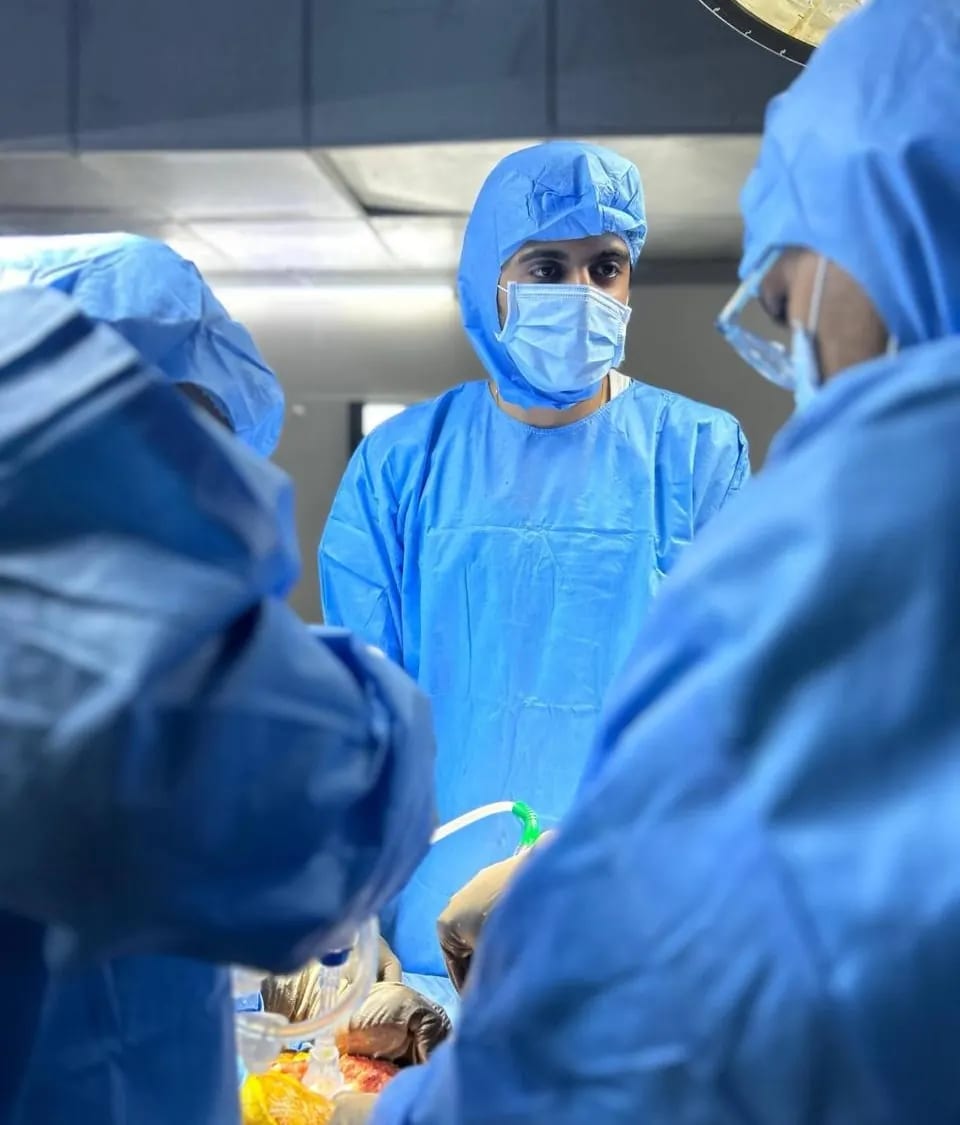
The shoulder is approached through a single incision at the front, between natural muscle planes rather than by cutting through the deltoid. The worn surfaces are removed and the implants fixed to bone — press-fit, or cemented where the bone is soft. The socket component is positioned using measurements planned from a CT scan beforehand, since accurate positioning is what determines both movement and how long the implant lasts.
What to expect afterwards
Pain relief is the most reliable benefit, and usually the one patients notice first — often within the first fortnight, after months or years of broken sleep. Movement returns more gradually over six to twelve months.
- Reaching a shelf, washing your hair and dressing without help are realistic goals for both designs.
- After an anatomic replacement, most people regain close to full movement in all directions.
- After a reverse replacement, lifting forwards and out to the side is usually good; reaching up behind your back is often the movement that stays limited.
- Heavy lifting, and impact or throwing sport, are discouraged for the life of the implant.
- Swimming, golf, cycling and gym work within sensible limits are generally fine once healed.
Risks
- Infection, in roughly 1 in 100 cases, and more difficult to treat than a superficial wound infection.
- Dislocation of the implant, which is more relevant to the reverse design and is why early movement is protected.
- Loosening or wear over many years, potentially needing revision.
- Fracture of the bone around the implant, either during surgery or later from a fall.
- Nerve irritation causing temporary numbness or weakness, usually recovering.
- Persistent stiffness, particularly if rehabilitation is delayed.
- For the reverse design specifically, wear of the bone under the socket component over time.
What recovery actually looks like
Written as a plan, not a promise. Your own timeline will be adjusted to what is found during the operation and how you progress — but this is the shape of it.
Day 0–2
In hospital
A nerve block keeps the first night comfortable. The arm is in a sling from the outset, and a physiotherapist starts gentle movement the day after surgery. Two nights is typical.
- Sling fitted in theatre
- Gentle assisted movement from day one
- Hand and elbow used freely
- Home on day two
Week 1–4
Sling and gentle movement
The sling is worn between exercises. Pain typically improves quickly — many patients sleep properly for the first time in years within the first two weeks. Assisted movement progresses under supervision.
- Night pain resolving
- Assisted forward lifting
- Wound healed and reviewed
- Sling discarded at three to four weeks
Week 4–12
Active movement
Lifting the arm under your own power, without resistance at first. Range improves steadily. Driving usually becomes possible at around six weeks.
- Active lifting to shoulder height
- Driving again
- Dressing and washing independently
- Light household tasks
Month 3–6
Strength
Progressive resistance work begins. Most patients notice steady month-on-month improvement through this period, and function keeps improving well beyond the point at which the shoulder stops hurting.
- Overhead reach restored
- Resistance training
- Return to golf, swimming, cycling
- Comfortable full days without the shoulder limiting you
Month 6–12
Settling
The shoulder continues to gain strength and confidence for up to a year. Annual review keeps an eye on the implant.
- Final range of movement reached
- Full confidence in daily use
- No routine restrictions beyond heavy lifting
- Annual review
Questions patients ask
The questions that come up most often about shoulder replacement.
Related conditions and treatments
- ConditionRotator Cuff TearA tear in the tendon sheet that grips the ball of your shoulder. The night pain is the giveaway.
- ConditionFrozen ShoulderThe lining of the joint thickens and contracts, so the shoulder becomes genuinely stuck. Painful, slow, and almost always self-limiting.
- TreatmentShoulder Arthroscopy & Rotator Cuff RepairReattaching the torn tendon on top of your shoulder to the bone with anchors, through three small keyhole incisions.
- TreatmentShoulder Stabilisation & LatarjetStopping a shoulder that keeps dislocating — by repairing the torn socket rim, or by rebuilding the socket with a block of your own bone.
- TreatmentKnee ReplacementResurfacing the worn ends of the joint with metal and plastic, for a knee where arthritis has taken away your walking and your sleep.
Bring your scans. Get a straight answer.
A consultation means your imaging on the screen, a plain explanation of what is actually wrong, and an honest opinion on whether you need surgery — including when the answer is no.